| Protecting Your Property
Published
Thursday 30th September 2004
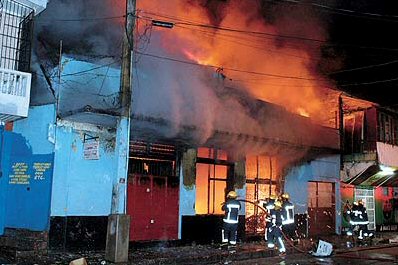
This week we are looking at the role of
insurance in maintaining property values.
The purpose of insurance is to provide a
level of protection against foreseeable losses. A prudent investor would
have their property properly insured in order to limit the extent of
losses in the event of damage. The central principle being that, in the
event of a loss, a good insurance policy would bring the policyholder
back to their original position—as if no loss had occurred.
Mortgage lenders insist that borrowers
have building insurance to cover the loss of their funds since these are
secured by the property. This is necessary and valuable since funds
would be available to ensure that the core asset can be replaced in the
event of its loss. However, as we will see later, there are other
aspects which these policies can overlook.
Another point is that some property
owners take the decision to let their insurance lapse once the mortgage
has been repaid and while this course of action can reduce the costs of
holding a property, it is risky. Others may simply not keep their
policies up-to-date and this can also give rise to similar risks. There
is a strategic decision to self-insure which some large or wealthy
property owners can take. In that case the owner is opting to reduce
holding costs by saving the insurance premiums on the assumption that,
in the unlikely event of a loss, there would be sufficient liquid assets
to pay for the restoration.
We have heard recent expert estimates
that over 60 per cent of the properties in this country are uninsured
and further, that about 30 per cent of the insured properties are
inadequately covered. When we consider the hurricane losses recently
experienced by our Caribbean neighbours and the probability of our
property owners suffering in a similar vein, as outlined in last week’s
column, it is clear that this is an important aspect for us to consider.
Next week we consider the lessons we can
learn from the Queen’s Park Savannah.
Some key points to bear in mind when
considering insurance for your property:
| Basis of cover
Reinstatement and replacement are two terms which are
sometimes used interchangeably to describe the basis of
cover.
In the event of a total loss, reinstatement cover would
entitle the policyholder to recover the cost of providing a
new building having the same size and facilities with
today’s techniques and materials. Replacement cover would
entitle the policyholder to recover the cost of providing a
new building having the same size and facilities with
identical techniques and materials.
The difference is only really substantial in the case of
older buildings with materials not currently in vogue, for
example, churches and schools. |
| The insurable risks
Your property insurance policy should cover risks well
beyond the conventional peril of fire.
These would include storm, flood, earthquake, civil
commotion or riot, soil movement or subsidence. It is
important to ensure that the policy has realistic terms and
these are covered in the section on insurance brokers. |
|
Extent of cover
The insurance policy
should extend beyond the cost of the building to include
the site improvements. These are the items outside the
building which enhance its utility, security and
amenity; ultimately they add value. Some of these would
be the drains, fences, external lighting, security
systems, terraces, steps, garden, pool and, of course,
retaining walls.
In the case of apartment
or townhouse type properties there would be a
significant cost to restoring the common facilities such
as carparks, driveways, lights and drains. If you live
in one of these complexes you should ensure that the
cover extends to these items. |
|
The insurable losses
The losses to be
covered should include more than just the cost of
constructing the new building and the essential site
improvements.
Other items to be
covered should include site clearance, the cost of
professional fees for designing the new building and
the cost for rental of suitable alternative
accommodation until rebuilding is complete. |
|
Insurance brokers
Some mortgage lenders have
arrangements with particular insurance providers to offer
discounted cover to their borrowers and these can be a
convenient and economical way of insuring your property. The
better course might be to use the services of an insurance
brokers to determine the best policy to cover your risks.
Insurance brokers are independent professionals who offer to
obtain the best cover for clients.
The broker’s commissions are
paid out of the insurance premium and, in some cases, the
results can be better than you might obtain from an
insurance salesman. |
| Level of cover
In addition to the aspects
outlined above, the policy would also have to offer an
adequate level of cover. If the level of cover is
inadequate, it would be necessary to find extra money to put
oneself in the original position.
In light of the rapidly
increasing cost of construction materials it would be
prudent for property owners to consider increasing their
levels of cover. |
|

|
This week we are looking at the roles of
insurance in maintaining property values.
|
|